
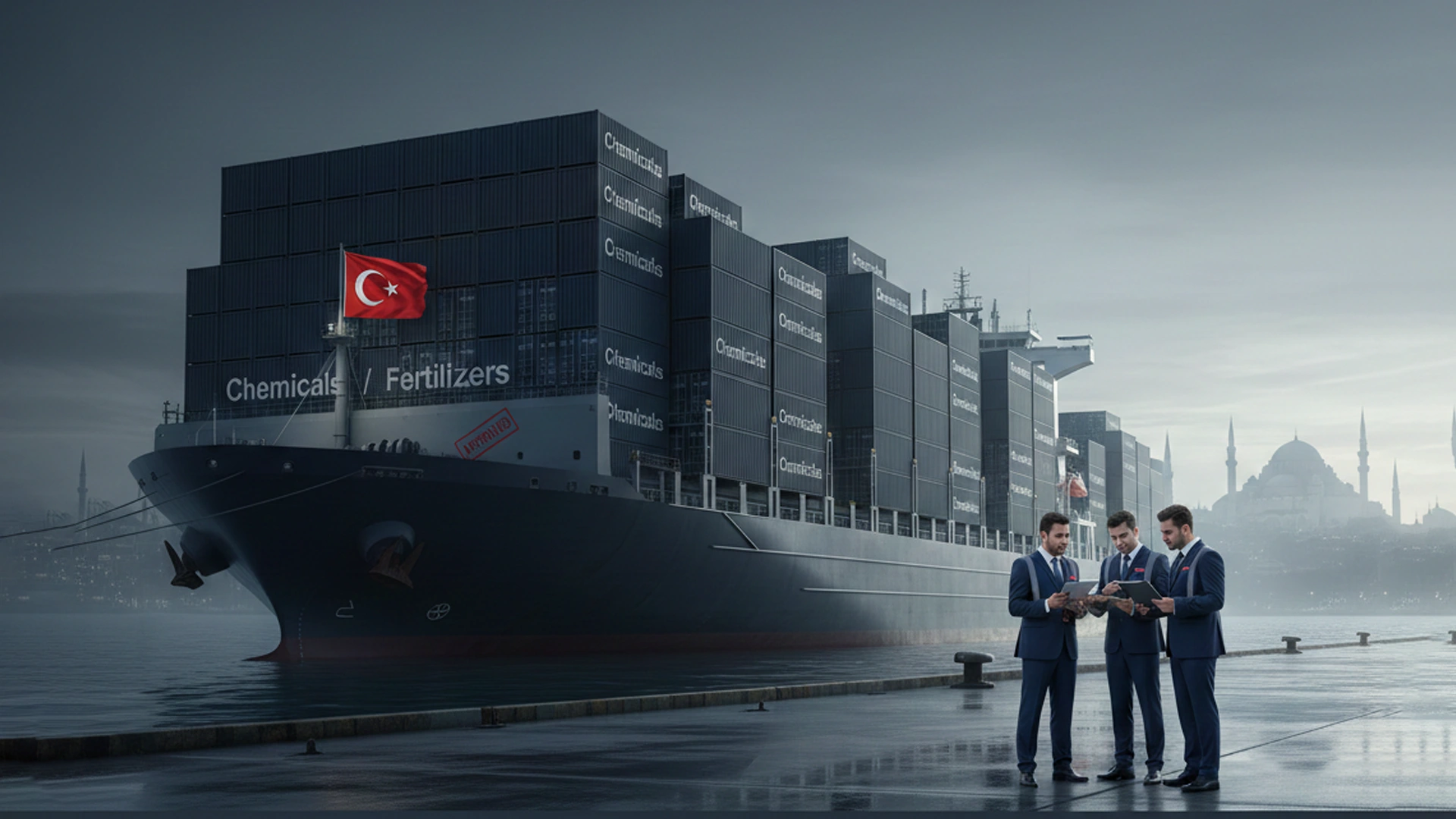
a costly classification mistake
A mid‑sized exporter from Turkey shipped a bulk fertilizer blend to a buyer in Northern Europe. The product’s MSDS listed trace amounts of a controlled precursor, but the export declaration used a generic HTS code for ‘fertilizers’ and omitted any dual‑use assessment. Customs held the consignment for testing — the delay cost the exporter a 12‑day demurrage bill, a €25,000 testing and storage expense, and a lost sale. How could this have been avoided? This article explains pragmatic, repeatable steps to classify chemical products correctly and avoid costly holds.
why correct classification matters
Correct product classification is the backbone of smooth international trade for chemicals and fertilizers. The right HTS or national code determines duties, statistical reporting and customs treatment; ECCN classification (or its local equivalent) determines whether an export license is required; UN numbers and hazard classes govern transport and packaging.
For professional exporters, classification is not an academic task — it is a risk‑management function that protects margins, preserves delivery schedules, and ensures legal compliance.
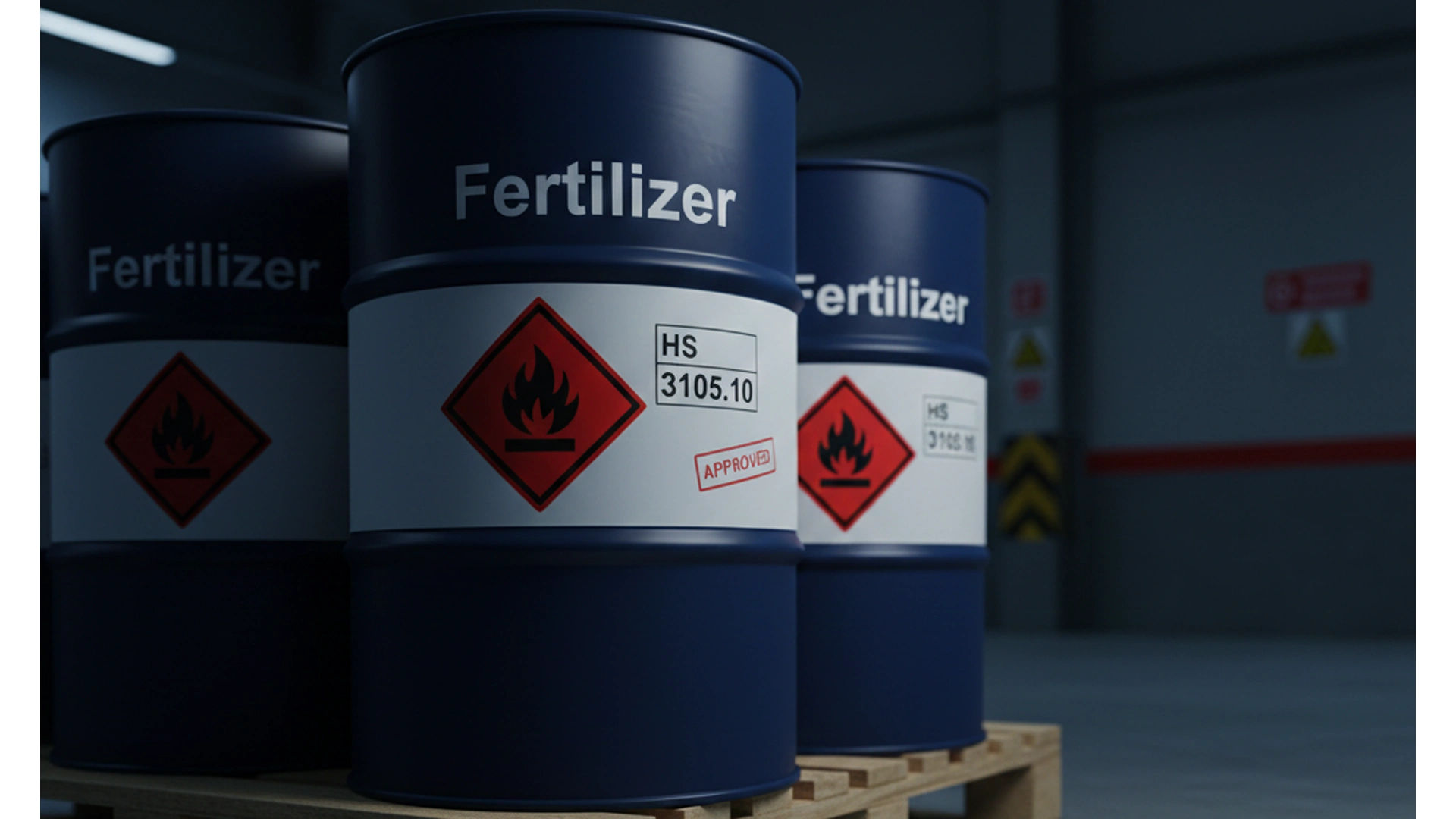
What is HTS / Schedule B / CN (and why it matters)
- HTS (Harmonized Tariff Schedule): international 6‑digit HS codes, extended by countries (Turkey uses national digits). HTS determines tariff treatment and customs processing.
- Schedule B / National Codes: e.g., US Schedule B (exports), EU Combined Nomenclature (CN). Each market may use slightly different extensions—pick the correct national code for declarations to avoid misclassification.
- Why it matters:
- Correct duties and tax treatment.
- Accurate customs clearance and statistical reporting.
- Avoiding post‑entry adjustments, fines or seizure.
What is ECCN / USML / dual‑use concept
- ECCN (Export Control Classification Number): used by the U.S. Commerce Department (BIS) to classify items that may require licenses due to dual‑use or national security concerns.
- USML (United States Munitions List): categories of defense articles requiring strict export controls.
- Dual‑use concept: items or precursor chemicals that have legitimate civilian uses but could also be repurposed for restricted applications.
Even when exporting from Turkey, ECCN considerations matter when:
- Products contain U.S.‑origin components, software or technology; or
- The end‑use or end‑user is restricted by foreign (e.g., U.S.) or multilateral controls.
Step‑by‑step classification process (practical)
- Gather complete technical data
- Full formulation, CAS numbers, concentration ranges, SDS/MDS, technical datasheets.
- Determine transport classification
- Identify UN number, hazard class, packing group for ADR/IMDG/IATA compliance.
- Assign HTS / national tariff code
- Use composition and primary function to select the HTS. Document your rationale (rule of interpretation). Consider requesting a binding classification ruling for high‑value or ambiguous items.
- Screen for dual‑use / ECCN triggers
- Check whether any constituent is flagged in control lists (US EAR, EU dual‑use lists). If U.S.‑origin inputs exist, determine ECCN.
- End‑use and end‑user checks
- Perform denied‑party screening and request end‑use statements as needed.
- Document & sign‑off
- Save a classification worksheet: inputs, chosen codes, who approved, and the date.
- Update and audit
- Reassess classifications when formulations change or laws are updated.
Example (fertilizer blend):
- Identify whether the product is a nitrogenous fertilizer (HS heading 3102/3103 family) or a compound with controlled precursor. If trace controlled precursors are present, ECCN screening is mandatory.

When to consult a specialist / how to request binding rulings
Consult a specialist when:
- The product has unusual ingredients or trace controlled substances.
- You supply components from multiple legal jurisdictions (e.g., U.S. origin content).
- Incorrect classification could lead to significant duties, licensing needs, or market denial.
Binding rulings:
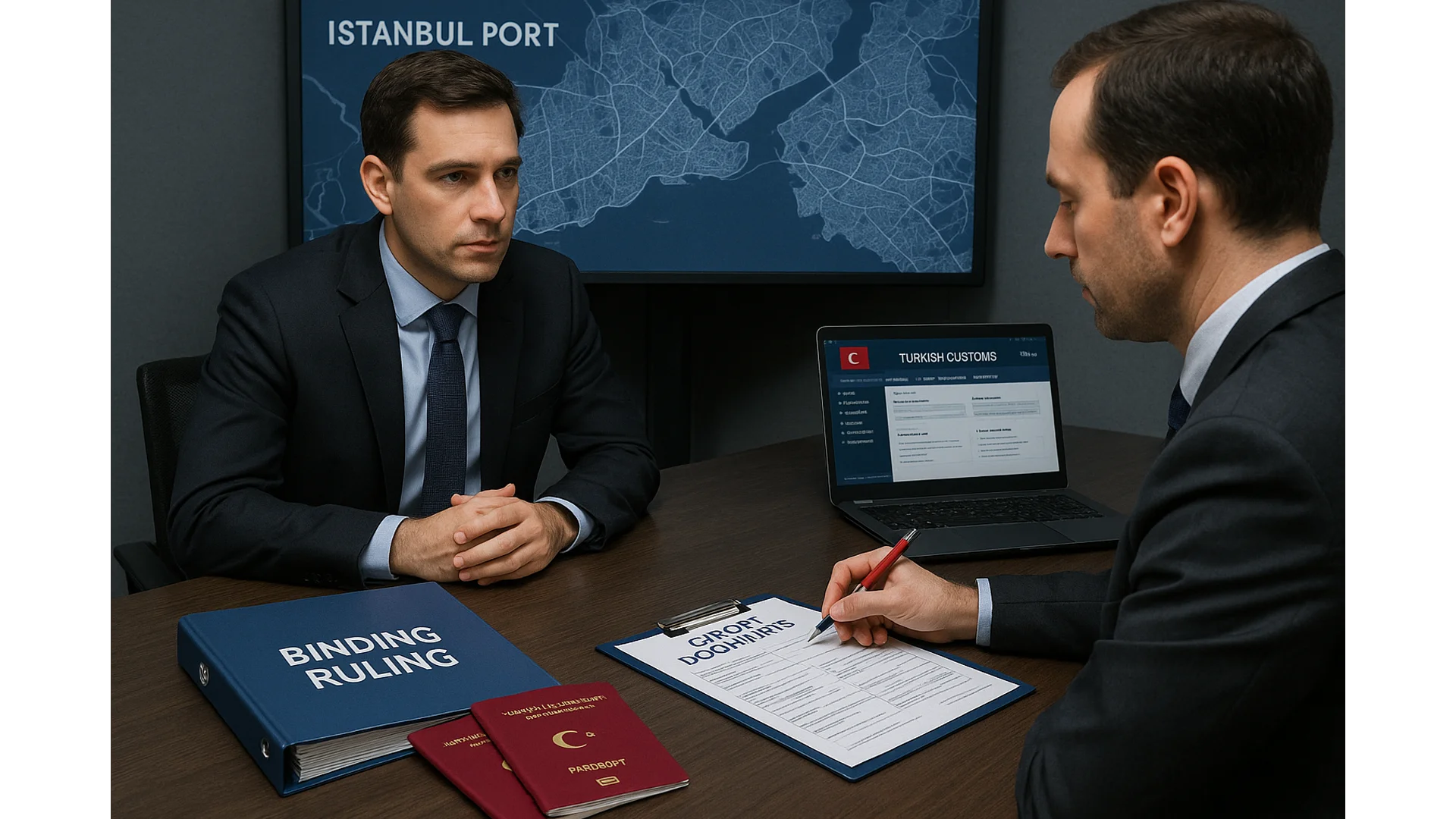
- Many customs authorities and export control agencies offer binding tariff/classification rulings. A binding ruling removes ambiguity and provides legal certainty — it is especially valuable for high‑value, repetitive shipments.
- Process: prepare technical dossier, submit to the national customs authority (e.g., Turkish Customs), and allow time for review (weeks to months). Factor ruling lead time into commercial planning.
Resources & tools
- Customs tariff lookup (national customs portals).
- Export control lists (U.S. EAR; EU Dual‑Use List).
- Commercial screening tools (denied party lists, sanctions screening).
- Laboratory testing partners for composition verification.
- ERP or cloud drive for document archiving and version control.
Industry stat table (for WordPress table block)
| Issue | Estimated incidence | Average cost impact |
|---|---|---|
| Classification/document errors | ~30–40% of delays* | €5,000–€30,000 per incident |
| Missing DG labeling | 10–15% | €2,000–€12,000 |
| Sanctions/denied party hits | 1–3% | Varies widely — can halt trade |
*Industry estimates vary; use as planning guidance.
Accurate classification protects margin and market access. If you handle complex chemical or fertilizer products, request product classification support from Demiral — we provide technical classification worksheets, ECCN screening, and binding ruling preparation.